Florida Trail, Seminole Ranch
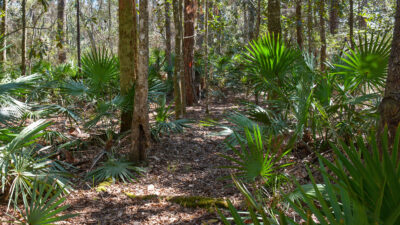
Christmas 4.6 milesSavor a thousand shades of green amid enormous trees by following the Florida Trail 4.6 miles through ancient palm hammocks along the St. Johns River floodplain at Seminole Ranch.

Florida Hikes
Hike Bike Paddle Camp Florida with authors Sandra Friend and John Keatley as your guides

Parks, trails, and gardens with the best botanical wonders in Florida
Savor a thousand shades of green amid enormous trees by following the Florida Trail 4.6 miles through ancient palm hammocks along the St. Johns River floodplain at Seminole Ranch.
7.5 miles. Walk through vast, open spaces that you’d never imagine existed so close to Orlando.
8.9 miles. Slipping through pine flatwoods and sandhills to the east of Sopchoppy, the Florida Trail plays tag with a network of forest roads that criss-crosses the southern portion of the Apalachicola National Forest.
Bridging an immense expanse of pine flatwoods bisected by floodplain forests, an 11-mile segment of the statewide Florida Trail crosses Tosohatchee WMA.
In the northwest corner of Osceola National Forest, this 11.4 mile segment of the Florida Trail offers strong contrasts between pine flatwoods and bogs.
Edging the Wakulla River floodplain, this 4.1 mile linear hike features quiet cypress swamps, towering trees, and a big bouncy sawdust pile hidden in the forest.
Along this 8.6-mile route spanning the eastern side of Bronson State Forest, experience the majesty of ancient oak and palm hammocks near the St. Johns River.
Southeast Florida is home to two poisonous trees, the poisonwood and the manchineel. Learn how to recognize them so you don't get too close, and find out how truly dangerous they are.
Explore coastal habitats on the Arrowhead Nature Trail at Fort De Soto Park, an interpretive walk where you'll learn about salt-dependent plants along Mullet Key Bayou.
The 0.4 mile Barrier Free Trail at Fort De Soto Park has a graded path wide enough for two wheelchairs to pass and six touch-activated interpretive speakers along the path.
At Fort Gadsden Historic Site, a gentle walk in the Apalachicola National Forest leads through the well-interpreted historic site and a pine forest where wildflowers thrive.
With layer upon layer of human habitation atop the highest natural hill on the southeastern Atlantic Coast, Fort George Island offers a long look at the past.