
Resources
Resources for exploring the area



Disclosure: As authors and affiliates, we receive earnings when you buy these through our links. This helps us provide public information on this website.
Exploring Big Pine Key
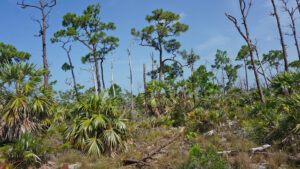
Largely wild and protected as National Key Deer Refuge, Big Pine Key is the home of the endangered Key deer.
That’s why there are chain link fences along US 1 as you drive through the tropical forest. The smallest deer species in America, these deer aren’t much larger than a German Shepherd.
 Key deer
National Key Deer Refuge protects the wild habitats which the deer need for survival, on Big Pine Key and the islands surrounding it.
Big Pine Key contains the largest concentration of population and services in the Lower Keys north of Key West, including lodgings, campgrounds, restaurants, and a grocery store.
 Big Pine Fishing Lodge Campground
The Lower Keys are otherwise heavily forested and lightly populated. Some of the most pleasant small resorts and campgrounds can be found on these islands.
Fishing, kayaking, and snorkeling are the only pursuits that might pull you away from the pool or a good book. And yes, there are tiki bars. Lots of them.
 Tiki bar at Geiger Key
For cyclists, this section of the Overseas Heritage Trail offers outstanding views and decent watering holes.
You’ll also deal with the least amount of hassle for road crossings and driveways as you bike between Big Pine Key and Stock Island, the gateway to Key West.
 Trailhead at the Wildlife Trails
Trails and Parks near Big Pine Key
 Bahia Honda State Park Long known for its beaches, Bahia Honda State Park provides a slender ribbon of Atlantic oceanfront amid a natural tropical setting in the lower Florida Keys.
 Blue Hole For the easiest wildlife watching at National Key Deer Refuge, visit the trail and observation deck at Blue Hole, a cenote-like pond that is the largest body of fresh water in the Florida Keys.
 Florida Keys Overseas Heritage Trail Spanning from Key West to Key Largo, this 108-mile linear state park corridor is an island-hopping slice of tropical paradise along the former route of the Florida Overseas Railroad.
 Fredrick C. Mannillo Jr. Nature Trail Key deer browse the understory of a pine rockland explored on this short accessible interpretive trail within National Key Deer Refuge.
 Jack C. Watson Wildlife Trail Rare pine rockland and rockland tropical hammock are key habitats for Key deer along this immersive interpretive loop on Big Pine Key.
 National Key Deer Refuge Established in 1957 to prevent the extinction of the diminutive Key deer, National Key Deer Refuge spans 84,351 acres across 25 islands in the Lower Keys.
 Old Bahia Honda Bridge Trail Stand above Bahia Honda State Park and take in a sweeping view from one of the highest points in the Florida Keys: atop the Old Bahia Honda Bridge, built in the early 1900s.
 Overseas Heritage Trail, Lower Keys 38.0 miles. Between Key West and Bahia Honda Key, this segment of the Florida Keys Overseas Heritage Trail crosses many historic railroad bridges along mangrove-lined shores.
 Torchwood Hammock Preserve Hidden at the southern tip of Little Torch Key, a short loop leads through a rugged tropical rockland hammock to open tidal zones lined with mangroves.
Articles
 The Future of Florida’s Key Deer (8/21/2019) A public meeting by the U.S. Fish & Wildlife Service on August 22, 2019 is the first step in informing the public of the potential of Key deer being removed from the Endangered Species List.
 The Florida Keys, Revisited (6/29/2018) Nine months after Hurricane Irma, we headed to the Florida Keys to see how both the infrastructure and the natural areas are healing. Here's an overview of what we found, from Key West to Key Largo.