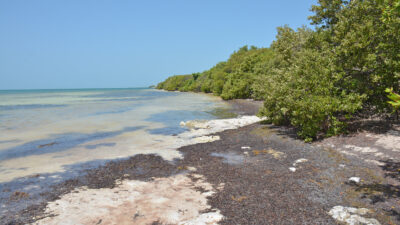
Amberjack Environmental Park
Englewood 2.8 milesAt Amberjack Environmental Park in Rotonda, explore a surprising meld of scrub and mangrove habitats along the high ground of the Cape Haze Peninsula.

Florida Hikes
Hike Bike Paddle Camp Florida with authors Sandra Friend and John Keatley as your guides

Where to find mangroves along trails in Florida
At Amberjack Environmental Park in Rotonda, explore a surprising meld of scrub and mangrove habitats along the high ground of the Cape Haze Peninsula.
On the Marsh Trail at Anastasia State Park, sea oats sway in the breeze alongside a scenic path flanked by tall dunes and a saltwater lagoon teeming with wildlife.
Whether a five-level observation tower or at ground level with the land crabs, Anne Kolb Nature Center focuses on the urban mangrove forest that it protects and interprets.
Along a picturesque Atlantic beach, a family-friendly accessible boardwalk weaves through a coastal forest, passing several covered picnic tables along the way.
A walk through the mangrove-lined edge of Florida Bay and the unique coastal prairie habitat of the Everglades, the Bayshore Loop explores the site of the former fishing village of Flamingo.
On the northern end of Key Biscayne, a set of sandy and paved trails lead out to a boardwalk overlooking fossilized coral reefs and downtown Miami in the distance.
Paralleling the former Homestead Canal, the Bear Lake Trail takes you on a journey through tropical hammock and mangrove forests along a road scooped from the canal diggings.
Burrowing deep into a jungle-like hammock along the Matanzas River, this loop to the north end of Washington Oaks Gardens State Park circles a historic piece of old A1A.
Betty Steflik Memorial Preserve protects 320 acres of mangrove marsh, mud flats, and coastal uplands fronting downtown Flagler Beach.
Black mangroves have shiny leaves and dark round seed cases. Their most distinguishing feature is their pnuemataphores, finger-like protrusions around the tree like slender, miniature cypress knees.
At one of Florida's most dramatic shorelines, explore a limestone bluff battered by Atlantic Ocean and beaches along the Indian River Lagoon.
Buttonwood grows upland, on the land side of the mangrove community, tolerant of rooting in loose sand, rock, and dried marl.