

The flora found along Florida’s trails is unlike anything you’ll find elsewhere in the United States, and that’s just the native species.
From columbine and trillium found in Appalachian-like valleys in the Florida Panhandle to tropical trees of Caribbean origin throughout South Florida, our botanical diversity is one of the best reasons to explore Florida’s trails.
Just a few inches of elevation change affects the habitats that surround you, as does the way that water flows across the landscape.
This visual guide is to introduce you to Florida’s diverse flora, including both common and unusual plants that you may encounter while you are enjoying our trails.
Mangroves in Florida
Nowhere else in the continental United States can you find mangrove trees. Here’s how to tell the difference between the species you see in Florida.
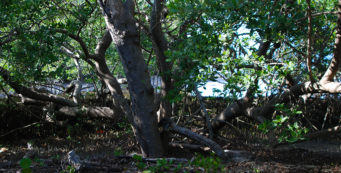 Black Mangrove Black mangroves have shiny leaves and dark round seed cases. Their most distinguishing feature is their pnuemataphores, finger-like protrusions around the tree like slender, miniature cypress knees.
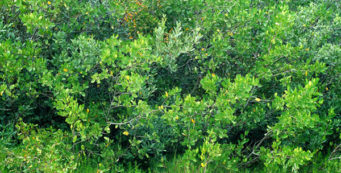 Buttonwood Buttonwood grows upland, on the land side of the mangrove community, tolerant of rooting in loose sand, rock, and dried marl.
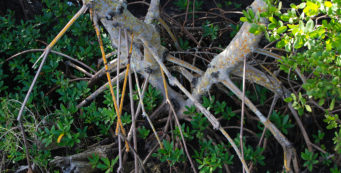 Red Mangrove Red mangroves are the easiest of the mangroves to identify due to their "walking legs" root systems. Note the bean-pod-like “roots” at their bases: these are miniature mangroves spawning, fully formed plants waiting to float off with the next high tide.
 White mangrove White mangroves are the most tree-like of the mangrove family. They have oval light green leaves—the other mangroves have dark green, elliptical leaves.
Trees in Florida
Identifying trees in Florida, including cypresses, pines, oaks, and many other species found in Florida.
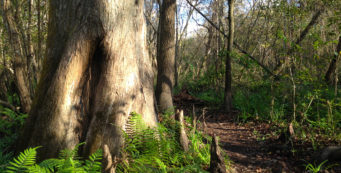 Bald Cypress A giant among trees, the bald cypress is an imposing sight. Unlike its relative the pond cypress, it prefers growing along water in motion, such as rivers, streams, and sluggish swamps. Black Mangrove Black mangroves have shiny leaves and dark round seed cases. Their most distinguishing feature is their pnuemataphores, finger-like protrusions around the tree like slender, miniature cypress knees. Buttonwood Buttonwood grows upland, on the land side of the mangrove community, tolerant of rooting in loose sand, rock, and dried marl.
 Cabbage Palm The state tree of Florida, the cabbage palm (also called sabal palm) is an iconic symbol found in almost every habitat in Florida, although it is less frequently seen in upland areas.
 Florida’s Toxic Trees Southeast Florida is home to two poisonous trees, the poisonwood and the manchineel. Learn how to recognize them so you don't get too close, and find out how truly dangerous they are.
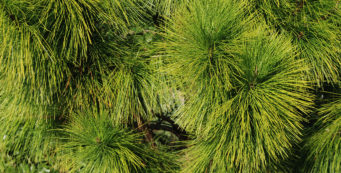 Longleaf Pine The tallest of Florida's pines, longleaf pine also has the longest needles, more than a foot long. Favored for lumber, most of the longleaf pine forests of the Southeast have been logged, but you can still immerse in impressive longleaf pine stands on Florida's trails. Red Mangrove Red mangroves are the easiest of the mangroves to identify due to their "walking legs" root systems. Note the bean-pod-like “roots” at their bases: these are miniature mangroves spawning, fully formed plants waiting to float off with the next high tide.
 Red Maple Also known as the swamp maple, the red maple is one of the more common large trees found in Florida's floodplain forests. It's by far the most colorful, too, sporting bright crimson leaves in late fall and early winter.
 Sand Live Oak A white oak in the same family as beeches and chestnuts, the sand live oak varies in size the farther north it goes in its range, from 20 feet in South Florida to an average of 50 feet tall.
 Strangler Fig Slowly suffocating its host by creating a leafy canopy above it and roots that surround it, the strangler fig (Ficus aurea) earns its name. You'll see it throughout tropical habitats in South Florida.
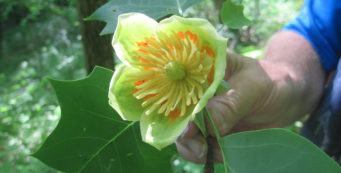 Tulip Poplar One of the easier trees to pick out while walking through the hardwood forests of the Appalachians, the tulip poplar has distinctive tulip-blossom shaped leaves and a large and extremely showy flower. It's found in Florida as south as Winter Springs. White mangrove White mangroves are the most tree-like of the mangrove family. They have oval light green leaves—the other mangroves have dark green, elliptical leaves.
Grasses in Florida
Grasses that grow naturally in Florida habitats.
 Sand Cordgrass It's found throughout Florida, in freshwater marshes and along the rim of saltwater marshes, and is by far one of the showiest grasses in Florida, especially when the huge tufts are ruffled by a breeze - sand cordgrass.
Mosses and Lichens
Mosses and Lichens commonly seen in Florida habitats.
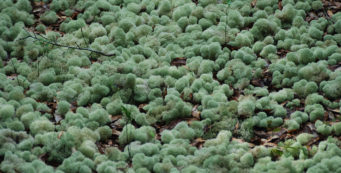 Deer Moss Large puffy lichens, such as pale greenish-gray Cladina evansii and yellowish Cladina subtenuis are lumped under the colloquial name of deer moss.
Shrubs
Shrubs, including flowering, seen in Florida habitats.
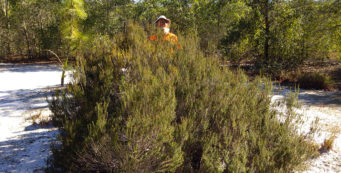 Florida Rosemary Florida rosemary (Ceratiola ericoides) is not related to the edible herb rosemary, which is in the mint family. It is one of the showier shrubs in scrub habitat due to its rounded shape and sometimes enormous size.
Vines
Vines, including flowering, commonly seen in Florida habitats.
 Gray Nickerbean Flowering mounds of gray nickerbean are found along the tropical coastal habitats of Florida. The beans float away with the tide and are polished by the waves, appearing as "sea beans" on other shores.
Wildflowers in Florida
Gray Nickerbean Flowering mounds of gray nickerbean are found along the tropical coastal habitats of Florida. The beans float away with the tide and are polished by the waves, appearing as "sea beans" on other shores.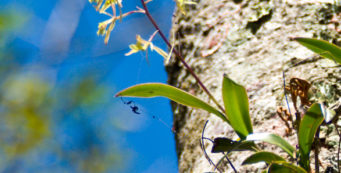
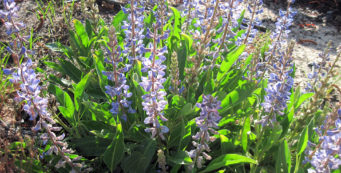 Gulf Coast Lupine Gulf Coast lupine (Lupinus westianus) is a threatened species found in sandhill/clayhill habitats in the far western corner of Florida.
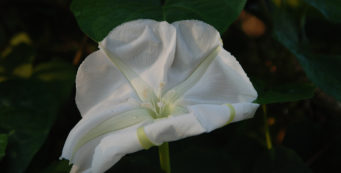 Moonflower A night bloomer that begins to close as daylight arrives, moonflower (Ipomoea alba) is commonly seen around Lake Okeechobee and throughout the Big Cypress as a draping vine cascading over trees and shrubs.
 Sea Myrtle Found along the coast and inland waterways, large bushes that burst into blooms of white puffs in fall are sea myrtle (also known as saltbush or groundsel bush), baccharis halimfolia.
 Swamp Sunflower One of Florida's showiest wildflowers, the swamp sunflower (Helianthus angustifolius) comes into its glory in numerous locations around the state in the fall.
Identify More Plants
The Florida Plant Atlas is the premiere online database of all native and non-native plant species found in Florida.