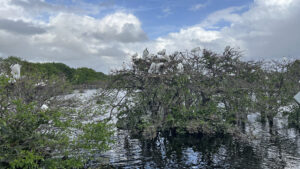
• Skip to main content
  • Skip to header right navigation
  • Skip to after header navigation
  • Skip to site footer
Florida Hikes logo

Florida Hikes

Hike Bike Paddle Camp Florida with authors Sandra Friend and John Keatley as your guides

  • Trails
  • Maps
  • Guidebooks
  • Hike
    • Scenic Hikes
    • Loop Trails
    • Dog-friendly Hikes
    • Hikes for Kids
    • National Parks in Florida
    • Florida State Parks
  • Bike
    • Major Bike Trails
    • Paved Bike Trails
    • Off Road Biking
    • Biking Articles
  • Paddle
    • Canoe & Kayak Rentals
    • Paddling Destinations
    • Paddling Articles
  • Camp
    • Cabin Rentals
    • Car Camping
    • Primitive Camping
  • Florida Trail
    • Plan your Hike
    • Best Scenic Hikes
    • Best Backpacking
    • Section Hiking
    • Thru-Hiking
    • Trail Updates
  • Travel
Rookery of wood storks

Wood Stork

The only stork native to North America, wood storks can have a wingspan of over five feet. Once highly threatened due to habitat loss, it’s made a spectacular comeback

Article by Sandra Friend (January 28, 2020)

Once an endangered species due to habitat loss in its nesting areas, the wood stork has adapted to change, moving its breeding grounds farther north.

You might remember being told as a kid that storks delivered babies. If that were true in America, it would have had to been a wood stork making those drop-offs! It’s the only stork that lives here.

Wood storks have a very limited range in the United States as well. Florida is the best place to see them.

They range west along the Gulf Coast to the Mississippi River and north along the Atlantic Coast into the Cape Fear floodplain around Wilmington, North Carolina.

Every time we see a wood stork, the word “ironhead” pops to mind. That’s what these gawky-looking cranes were called when we were kids.

Wood stork on railing amid roofed structures Wood stork hovering above the alligator pens at Gatorland


Identifying a Wood Stork

When you look at a wood stork, it’s that massive dark bill you see first. They are mostly white, except for the bill and their black tail.

When they fly overhead, their silhouette is very distinct. They always fly with their neck and legs extended, making them appear much larger in the sky than they do on the ground.

Young storks have yellow bills which do not turn black until they are several years old. They also have some tufty feathers atop their heads.

Wood stork fuzzy chicks Wood stork rookery at the Jacksonville Zoo


Where Wood Storks Live

The wood stork was among the birds that William Bartram noted during his travels in Florida in 1774, along the St. Johns River in the vicinity of Astor.

John James Audubon referenced Bartram when he drew his first sketch of the “Wood Ibis,” which he says he had found in Florida and along the Gulf Coast to Mississippi.

He observed that the “wood ibis” would linger around alligators and even eat baby alligators, but the alligators would not harm them, going after ducks and herons instead.

In the United States, the wood stork’s historical range followed the Gulf Coast to Texas. Breeding colonies stretched up the Atlantic Coast to South Carolina.

Breeding colonies of wood storks are found through coastal Mexico, Central America, and much of South America. They can also be seen in parts of the Caribbean.

Wood storks prefer wetlands. You will find them in both shallow freshwater wetlands in Florida and in estuaries along the coasts.

Wood stork next to grassy ditch Wood stork along a ditch near Taylor Creek


How Wood Storks Nest

Like many of Florida’s wading birds, wood storks are colonial nesting birds. That means they like to build nests close to each other.

Since snakes, raccoons, opossums, and rodents will raid bird nests for eggs, wood storks build their nests very high in the trees, preferably cypress trees.

They prefer to choose sites where there is a swamp below, or on an island in a swamp. Perhaps you’ve noticed the fabulous bird rookeries in Florida alligator farms and zoos?

Having alligators cruising below to pick off predators increases the chances that the baby birds survive.

It takes wood storks a month to incubate up to 5 eggs. The parents spend four more months raising their young.

Wood storks in nests in low trees Wood stork rookery at Wakodahatchee Wetlands


Why are Wood Storks Threatened?

From more than 30,000 birds counted in the 1930s, the breeding population of wood storks in the United States declined by 75% by the early 1980s.

By February 28, 1984, the U.S. Fish and Wildlife Service listed the breeding population of wood storks in United States as endangered.

As more and more of Florida was being developed after World War II, swamps were literally drained all over the state. Wood storks need those swamps for survival.

Wood storks will generally not build nests unless they can build them above a swamp.

Wood storks come back to the same nesting areas year after year. This is why it is crucial to protect places where there are known to nest.

Rookery of wood storks
Rookery of wood storks at Wakodahatchee Wetlands

What is the Long Term Outlook for Wood Storks?

In 2014 – thirty years after being placed on the Endangered Species List – the status of the wood stork breeding population was downgraded to “threatened.”

That means that the population of wood storks is increasing. But there are still struggles – particularly in Big Cypress and the Everglades – with water levels being high enough in the swamps to protect the wood stork nests.

If water levels aren’t high enough, the wood storks won’t nest – not even at their long-time nesting grounds in Corkscrew Swamp.

Wood storks flying with branches Wood storks gathering branches for nests at Orlando Wetlands


Development in this region of Florida – especially development that involves drainage of swamps and adding of fill to the Big Cypress ecosystem – continues to be a concern for the long-term health of wood storks as a species.

Other threats include the effects of pesticides and toxic algae blooms in Florida waters, and one that none of us could have seen coming: Burmese pythons. In the Everglades, they treat wood storks as prey.

Wood stork
A mature wood stork

Where to see a Wood Stork

This is not a comprehensive list of wood stork locations, but rather places where we’ve personally observed them. To find more good places to see wood storks, see our page on National Wildlife Refuges.

Big Cypress National Preserve
A spectacular birding destination in late winter months, Big Cypress National Preserve is a watery wilderness best described as the Western Everglades. Visit the Oasis Visitor Center to see dozens of wood storks along the canal; birds vary by season.
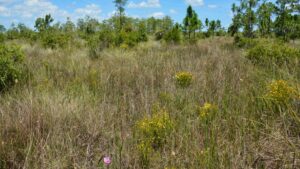
Summer in Big Cypress Big Cypress National Preserve Protecting nearly three quarters of the million-acre Big Cypress Swamp, Big Cypress National Preserve is Florida's second largest and most remote wilderness.


Corkscrew Swamp Sanctuary

Known for its well-established breeding colony, Corkscrew Swamp Sanctuary is an Audubon preserve where an old-growth cypress strand is preserved for the sake of these nesting birds.

boardwalk to big cypresses in Corkscrew Corkscrew Swamp Sanctuary Weaving beneath a canopy knit by old-growth cypress trees in a majestic swamp forest, the boardwalk at Corkscrew Swamp Sanctuary is one of Florida's best hikes.

Gatorland
With quick access to food scraps, the wood storks here are rather bold, so you can get good photos. But the Alligator Breeding Marsh protects a prime nesting area for colonial nesting birds, so wood storks are a mainstay at this natural attraction.

Pond with sky reflections, alligators, herons, egrets, and a boardwalk Gatorland Gatorland is not just a historic Florida attraction but an immersion into what this part of Central Florida used to be, a cypress swamp full of critters.

Orlando Wetlands
Imagine our surprise to see wood storks actively picking up sticks and taking to the oaks to build nests at this popular wetlands park, but that’s exactly what they do. Look for them in and around the trees northwest of Lake Searcy.
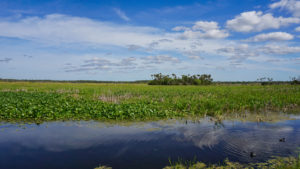
Open marsh at Orlando Wetlands Park Orlando Wetlands For a hike filled with the flutter and squawk of birds, Orlando Wetlands is one of the best birding spots in the state. This 5-mile loop follows our favorite route.

Taylor Creek STA
Along the loop trail in this Okeechobee-area preserve, expect to see not just wood storks but every sort of wading bird as they compete for fish in the wetland pools that filter agricultural runoff out of Taylor Creek before it reaches Lake Okeechobee.
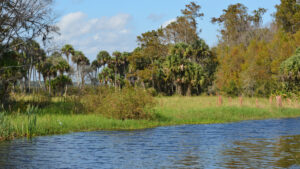
Canal with cypresses, tall reeds, and birds Taylor Creek STA Encompassing the ancient shoreline of Taylor Creek and man-made marshes, this wetlands park is a gem for birding and wildlife watching just north of Okeechobee.

Wakodahatchee Wetlands
The low pond apple trees in these purpose-built wetlands host different nesting birds in every season. In early March, the wood storks settle in and set up their nests.
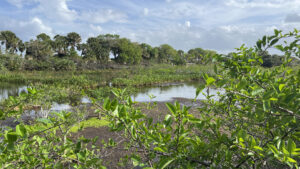
Line of cabbage palms beyond a showy marsh Wakodatahatchee Wetlands A seasonally rotating array of wading birds roost and nest among the pond apple islands of these purpose-built Palm Beach County water filtration wetlands.

Jacksonville Zoo and Gardens
When we looked up into the trees above the Plains of East Africa boardwalk, the last thing we expected to see were baby wood storks fussing on their nests. The African creatures below them must scare predators away.

Zoo Website


Explore More!

Slideshow

A slideshow of images of wood storks from the places we’ve seen them around Florida.


Audubon Guide Cornell eBird USFWS Birds of America


Citations

U.S. Fish and Wildlife Service, 1996. Revised recovery plan for the U.S. breeding population of the wood stork.
U.S. Fish and Wildlife Service Species Profile.
John James Audubon, Birds of America

  • Author
  • Recent Posts
Sandra Friend
Sandra Friend
Author of 45 books, Sandra Friend established FloridaHikes.com in 2006 to expand on the field research she'd completed for her first six hiking guides. She has been honored with lifetime achievement awards from the Florida Trail Association and the Florida Outdoor Writers Association.
Sandra Friend
Latest posts by Sandra Friend (see all)
  • Michael Crotty Bicentennial Park - November 3, 2026
  • A.J. Henry Park - November 1, 2026
  • Okeeheelee Nature Center Trails - October 22, 2026
Category: Articles, Birds, WildlifeTag: ID

Sidebar

Identify Florida Species

  • Birds in Florida
  • Insects in Florida
  • Plants and Trees in Florida
  • Wildflowers in Florida
  • Wildlife in Florida
  • Florida’s Habitats

Our Florida Books

Book cover of Florida Trail Hikes
The Florida Trail Guide fifth edition
50 Hikes in Central Florida 3rd edition
Explorer's Guide North Florida & The Panhandle guidebook
Five Star Trails Gainesville & Ocala guidebook
Five Star Trails Orlando guidebook

Florida Trail Apps

Farout GuidesFarout Apps Comprehensive logistics and offline maps for the
Florida National Scenic Trail (1,500 miles), the Florida Keys Overseas Heritage Trail (108 miles), and the ECT Florida Connector (92 miles).

FIND A TRAIL OR PARK

METROS: Bradenton. Clearwater. Crestview. Daytona Beach. Destin. Fort Lauderdale. Fort Myers. Fort Walton Beach. Gainesville. Jacksonville. Kissimmee. Lakeland. Melbourne. Miami. Naples. Ocala. Orlando. Panama City Beach. Pensacola. Port St. Lucie. Punta Gorda. St. Petersburg. Sanford. Sarasota. Sebring. Stuart. Tallahassee. Tampa. Vero Beach. West Palm Beach.

MULTI-REGION: Atlantic Coastal Ridge. Atlantic Coast. Bartram Trail. Big Bend. East Coast Greenway. Everglades National Park. Florida National Scenic Trail. Gulf Coast. Lake Wales Ridge. WATERWAYS: Indian River Lagoon. Intracoastal Waterway. Kissimmee River. St. Johns River. Withlacoochee River.

NORTHWEST FLORIDA: Altha. Apalachicola. Apalachicola National Forest. Big Bend Scenic Byway. Blackwater River State Forest. Blountstown. Bonifay. Bristol. Bruce. Cantonment. Cape San Blas. Carrabelle. Chattahoochee. Chipley. Crawfordville. DeFuniak Springs. Eastpoint. Ebro. Eglin Air Force Base. Freeport. Fountain. Gulf Breeze. Gulf Islands National Seashore. Holt. Madison. Marianna. Milton. Monticello. Mossy Head. Munson. Navarre. Navarre Beach. Newport. Niceville. Panacea. Panama City . Perdido Key. Ponce De Leon. Port St. Joe. Quincy. Santa Rosa Beach. Sopchoppy. South Walton. St. George Island. St. Marks. St. Marks NWR. Sumatra. Vernon. Wakulla. Wewahitchka. Woodville. WATERWAYS: Apalachicola River. Blackwater Bay. Blackwater River. Chipola River. Choctawhatchee Bay. Choctawhatchee River. Coastal Dune Lakes. Ochlockonee Bay. Perdido River. St. Marks River. Wacissa River. Wakulla River. Yellow River.

NORTH FLORIDA: Alachua. Amelia Island. Archer. Baldwin. Branford. Bronson. Bunnell. Callahan. Cedar Key. Chiefland. Crescent City. Cross City. Cross Creek. Dowling Park. Ellaville. Fanning Springs. Fernandina Beach. Flagler Beach. Fort White. Glen St. Mary. Green Cove Springs. Hawthorne. High Springs. Inglis. Jacksonville Beaches. Jacksonville Northshore. Jasper. Jennings. Keystone Heights. Lake Butler. Lake City. Live Oak.Macclenny. Mandarin. Mayo. Mayport. Micanopy. Middleburg. Old Town. Olustee. Orange Park. Osceola National Forest. Palatka. Palatka-Lake Butler Trail. Palm Coast. Palm Valley. Perry. Ponte Vedra. Rodman. Salt Springs. St. Augustine. Starke. Steinhatchee. Suwannee. Suwannee River Wilderness Trail. Suwannee Springs. Talbot Islands. Timucuan Preserve. Trenton. Waldo. Welaka. White Springs. Williston. Worthington Springs. Yankeetown. WATERWAYS: Santa Fe River. St. Marys River. Suwannee River. Tolomato River. Upper Withlacoochee River.

CENTRAL FLORIDA: Altamonte Springs. Apollo Beach. Apopka. Astatula. Astor. Auburndale. Bartow. Babson Park. Bayport. Belleview. Bithlo. Brandon. Brooksville. Bushnell. Canaveral National Seashore. Cassadaga. Christmas. Chuluota. Citrus Springs. Clearwater Beach. Clermont. Coast to Coast Trail. Cocoa. Cocoa Beach. Cross Florida Greenway. Crystal River. Dade City. De Leon Springs. DeBary. Deland. Deltona. Dunedin. Dunnellon. Edgewater. Enterprise. Eustis. Ferndale. Fort Meade. Frostproof. Geneva. Gibsonton. Haines City. Hernando. Hernando Beach. Holopaw. Homosassa. Inverness. Kenansville. Kissimmee. Lake Mary. Lake Wales. Largo. Leesburg. Lithia. Longwood. Lutz. Maitland. Malabar. McIntosh. Melbourne Beach. Merritt Island. Merritt Island NWR. Mims. Mount Dora. Narcoossee/Lake Nona. New Port Richey. New Smyrna Beach. Nobleton. Oak Hill. Oakland. Ocala National Forest. Ocklawaha. Ocoee. Oldsmar. Orange City. Ormond Beach. Osteen. Oviedo. Paisley. Palm Bay. Plant City. Poinciana. Polk City. Ponce Inlet. Port Orange. Ridge Manor. Riverview. Ruskin. Safety Harbor. Silver Springs. Sorrento. Spring Hill. St. Cloud. Tarpon Springs. Thonotosassa. Titusville . Umatilla. Viera. Walt Disney World. Weeki Wachee. Weirsdale. Wimauma. Windermere. Winter Garden. Winter Haven. Winter Park. Winter Springs. Withlacoochee State Forest. Withlacoochee State Trail. Yeehaw Junction. Zephyrhills. WATERWAYS: Alafia River. Halifax River. Hillsborough River. Lake Apopka. Little Manatee River. Ochlawaha River. Rainbow River. Tampa Bay. Wekiva River. Wekiva River Basin.

SOUTHWEST FLORIDA: Alva. Boca Grande. Cape Coral. Charlotte Harbor. Ding Darling NWR. Ellenton. Englewood. Estero. Immokalee. Marco Island. North Port. Osprey. Palma Sola. Palmetto. Pine Island. Port Charlotte. Sanibel Island. Venice. WATERWAYS: Caloosahatchee River. Manatee River. Myakka River. Pine Island Sound.

SOUTH FLORIDA: Arcadia. Basinger. Big Cypress National Preserve. Big Cypress Seminole Reservation. Big Cypress Swamp. Bowling Green. Clewiston. Everglades City. Indiantown. LaBelle. Lake Okeechobee Scenic Trail. Lake Placid. Lakeport. Moore Haven. Okeechobee. Ortona. Pahokee. Palmdale. Port Mayaca. South Bay. Wauchula. Zolfo Springs. WATERWAYS: Fisheating Creek. Lake Okeechobee. Peace River.

SOUTHEAST FLORIDA: Biscayne Bay. Biscayne National Park. Boca Raton. Boynton Beach. Coconut Creek. Coral Gables. Coral Springs. Davie. Delray Beach. Fellsmere. Flamingo. Fort Pierce. Hobe Sound. Hollywood. Homestead. Indrio. Jensen Beach. Juno Beach. Jupiter. Jupiter Farms. Key Biscayne. North Hutchison Island. Ocean to Lake Greenway. Palm Beach. Palm Beach Gardens. Pompano Beach. Redland. Sebastian. South Hutchinson Island. WATERWAYS: Florida Bay. St. Lucie River.

FLORIDA KEYS: Big Pine Key. Islamorada. Key Largo. Key West. Marathon. Overseas Heritage Trail.


©2006-2026, Sandra Friend & John Keatley | Disclosure | Site Index | Work with Us | Advertise with Us | Terms of Service and Privacy Policy

Florida Hikes PO Box 93 Mims FL 32754 | Contact