Oyster Creek Environmental Park
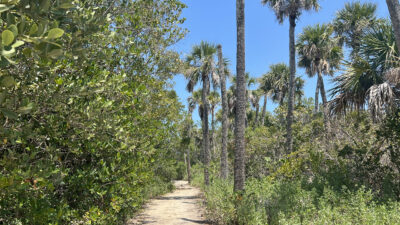
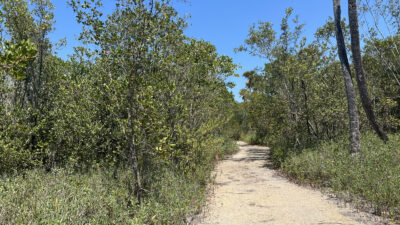
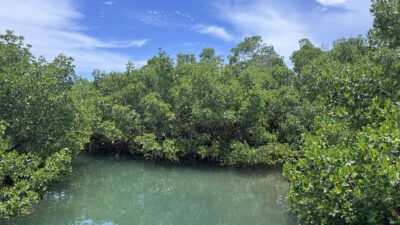
Englewood 2.4 milesAlong the northern shore of a mangrove-lined creek, Oyster Creek Environmental Park offers gentle hiking trails with interpretive stops beneath old-growth slash pines.

Florida Hikes
Hike Bike Paddle Camp Florida with authors Sandra Friend and John Keatley as your guides

Where to find mangroves along trails in Florida
Along the northern shore of a mangrove-lined creek, Oyster Creek Environmental Park offers gentle hiking trails with interpretive stops beneath old-growth slash pines.
In a hidden corner of Hobe Sound, Peck Lake Park lets you tunnel through coastal habitats along the Pioneer Passage to an observation point along the Indian River Lagoon.
Designed the first Federal Bird Reserve in 1903, Pelican Island National Wildlife Refuge celebrated its century mark by creating this short, scenic, accessible trail for birding.
At John Pennekamp Coral Reef State Park, the Mangrove Trail is an accessible boardwalk that gets you right into the heart of a mangrove tunnel along a tidal creek
A historic mansion and farmhouse anchor this 60-acre county park with paddler access to Phillippi Creek, fishing piers, and shell paths along a coastal hammock.
Amid mangrove swamps along an old pioneer route in Kings Park, the Pioneer Paddling Trail offers an intimate look at a forgotten wild corridor on Merritt Island.
A city park with dramatic sunsets over a beach on Charlotte Harbor, Ponce De Leon Park is a delight for birders and paddlers, too.
Just south of Daytona Beach, Ponce Preserve protects a cross-section of barrier island habitats, with nearly 2 miles of trails connecting the beach and the Halifax River
Protecting the remnants of an ancient culture, Queens Island Preserve edges the Indian River Lagoon along the southern end of North Hutchinson Island.
Part of the larger Queens Island Preserve along the Indian River Lagoon, the trail system of Queens Island Preserve North has a separate entrance and loop off the East Coast Greenway.
Experience an impressive variety of mangrove wetlands, boardwalks, sandy shoreline, and coastal wildlife on a mile hike in one compact preserve.
Red mangroves are the easiest of the mangroves to identify due to their "walking legs" root systems. Note the bean-pod-like “roots” at their bases: these are miniature mangroves spawning, fully formed plants waiting to float off with the next high tide.