Mount Carrie Wayside
Olustee 1.0 milesThe short, easily accessed Mount Carrie Wayside in Osceola National Forest showcases an old growth longleaf pine forest with a population of red-cockaded woodpeckers.

Florida Hikes
Hike Bike Paddle Camp Florida with authors Sandra Friend and John Keatley as your guides

Parks, natural lands, and trails notable for wildlife encounters, the whole range from armadillos to alligators, Florida black bears to gopher tortoises, and manatees to whales.
The short, easily accessed Mount Carrie Wayside in Osceola National Forest showcases an old growth longleaf pine forest with a population of red-cockaded woodpeckers.
Dense woodlands, open plains, and lakes: it's all recreated here just outside the fence of the West Palm Beach International Airport at Mounts Botanical Garden.
Set along a remote sweep of vast marshes along the St. Johns River, Mullet Lake Park is home to a stunning array of swamp sunflowers each fall.
For immersion in the vast central prairies of the Florida peninsula, the 39-mile Myakka Hiking Trail is a serious backpacking destination in South Florida near Sarasota.
With tall waving grasses, saw palmetto, and the sound of birds, Myakka River State Park is Florida's Big Sky country, blanketing more than 37,000 acres east of Sarasota.
In an essential refuge for native plants and animals surrounded by expanding development in the Naples area, two loop trails span a sandy forest of pines, palms, and cypress trees.
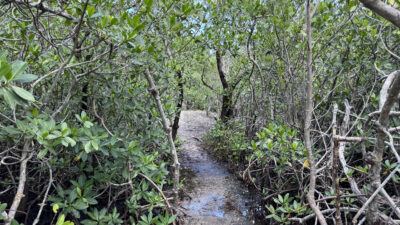
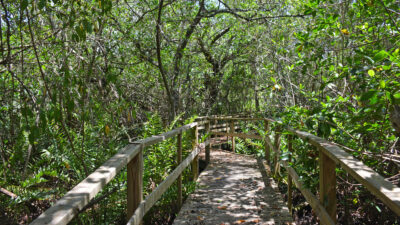
At the southern end of Pine Island, a hidden trail winds through mangrove habitat, crossing numerous bridges and navigating surprisingly uneven terrain.
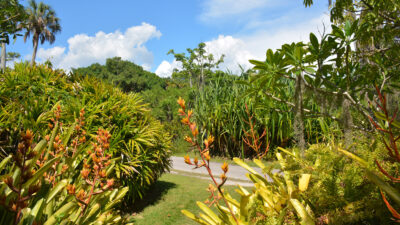
At Naples Botanical Garden, buildings, landscaping, and nature live in harmony, with a delicate balance of natural spaces and lush gardens accented with art achieved.
Edging the mangrove-lined Gordon River immediately south of the Naples Zoo, this 21-acre Conservancy of Southwest Florida complex pairs learning with nature trails and wildlife.
Established in 1919 by botanist Henry Nehrling, what is now the Naples Zoo at Caribbean Gardens has improved over a century's worth of expansion into an accredited zoological park.
Established in 1957 to prevent the extinction of the diminutive Key deer, National Key Deer Refuge spans 84,351 acres across 25 islands in the Lower Keys.
One of the most compelling hiking destinations near Pensacola, the trails on the Pensacola Bay side of Naval Live Oaks Area offer outstanding scenery and surprisingly hilly terrain.